
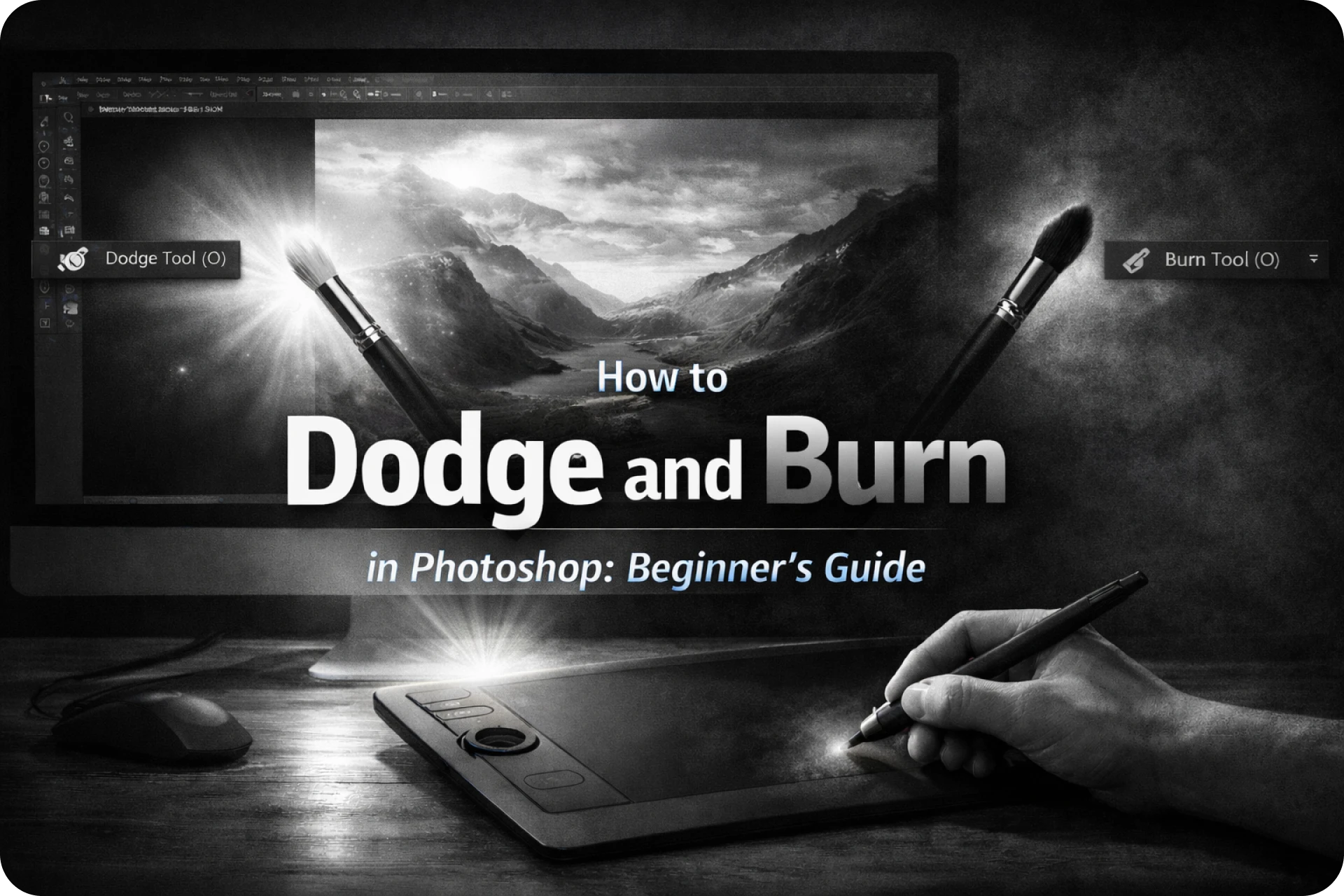
Introduction: What is Dodging and Burning in Photoshop?
When editing photos in Photoshop, two key techniques stand out for adding depth and dimension: dodging and burning. These methods help to manipulate light and shadow to bring out the best features of your images. Whether you’re working on a portrait, landscape, or any type of photo enhancement, understanding how to dodge and burn in Photoshop will take your skills to the next level.
In this Photoshop dodge and burn tutorial, I will walk you through each step to enhance your photos effectively using these light and shadow techniques. Whether you’re a beginner or looking to refine your skills, you’ll be able to master this technique in no time!
What is Dodging and Burning in Photoshop?
- Dodging: Lightens areas of an image, typically used to emphasize highlights or bring out detail in lighter areas.
- Burning: Darkens areas of the image, used to enhance shadows or create depth in darker regions.
These methods can be used together in Photoshop to add professional-level contrast, texture, and drama to any image. Learning the proper dodging and burning technique is an essential skill for anyone working with photo editing.
Step 1: Open Your Image in Photoshop
Start by opening the image you want to work with in Photoshop. Whether you’re editing a portrait photo or a landscape, this technique works on all types of images. RAW images are ideal for dodging and burning since they retain more details and offer more flexibility for editing.
Step 2: Create a New Layer for Dodging and Burning
- Navigate to Layer > New > Layer.
- Name the layer “Dodge and Burn” or something recognizable.
- Set the layer’s Blending Mode to Overlay. This will ensure your changes affect only the brightness and shadows without altering the image.
Creating a new layer ensures that you’re working in a non-destructive way, meaning you can always adjust or remove the effect later.
Step 3: Fill the Layer with 50% Gray
Now, fill the new layer with 50% gray so it doesn’t affect the image until you apply the dodge or burn effect:
- With the new layer selected, go to Edit > Fill.
- Select 50% Gray from the options and click OK.
Step 4: Select the Dodge or Burn Tool
Now that you’ve set up your layer, it’s time to use the Dodge Tool and Burn Tool to apply light and shadow effects.
- Dodge Tool: This tool lightens areas of your image, great for highlights and brighter areas.
- Burn Tool: This darkens areas, which is useful for shadows and adding depth.
Use the Exposure setting at around 10-20% for better control over the effect, and gradually build up the intensity.
Step 5: Start Dodging and Burning
To apply the effect:
- Dodge Tool: Lighten areas like skin highlights in a portrait or sunlight in a landscape.
- Burn Tool: Darken areas to add depth to shadows or backgrounds.
Remember, start subtle and gradually build the effect for the most natural-looking results.
Step 6: Fine-Tune the Effect
After dodging and burning the image, you can adjust the opacity of the “Dodge and Burn” layer to fine-tune the effect. If necessary, use a soft brush to smooth transitions and make the changes appear more natural.
Optional: Use a Layer Mask for More Control
For more precise control, use a Layer Mask:
- Click the Layer Mask icon at the bottom of the Layers panel.
- Use a soft brush with black to hide parts of the effect, or white to reveal it.
This allows you to target specific areas of the image with the dodge and burn technique.
FAQs: Frequently Asked Questions About Dodging and Burning in Photoshop
Q: What is the best way to dodge and burn in Photoshop for portraits?
A: In portraits for example, use the Dodge Tool to highlight features like the eyes, cheekbones, or lips, and the Burn Tool to add depth to areas like the hairline or jawline.
Q: How do I avoid overdoing the dodge and burn effect in Photoshop?
A: Start with low Exposure settings (10-20%) and build up the effect gradually. Always adjust the opacity to ensure a natural look.
Conclusion: Master Dodging and Burning in Photoshop
By mastering the dodging and burning technique in Photoshop, you can enhance your photos and add professional-quality depth and contrast. Whether you’re editing portrait images, landscapes, or any other type of photo, this technique will give you full control over your light and shadow effects.
Looking for more tips?
If you found this guide helpful, don’t miss out on our latest Photoshop tutorials, where we cover everything from photo retouching to advanced blending techniques.
Stay updated!
Subscribe to our newsletter and get expert tips, tutorials, and exclusive content delivered straight to your inbox. Never miss a new post and become a Photoshop pro in no time!
